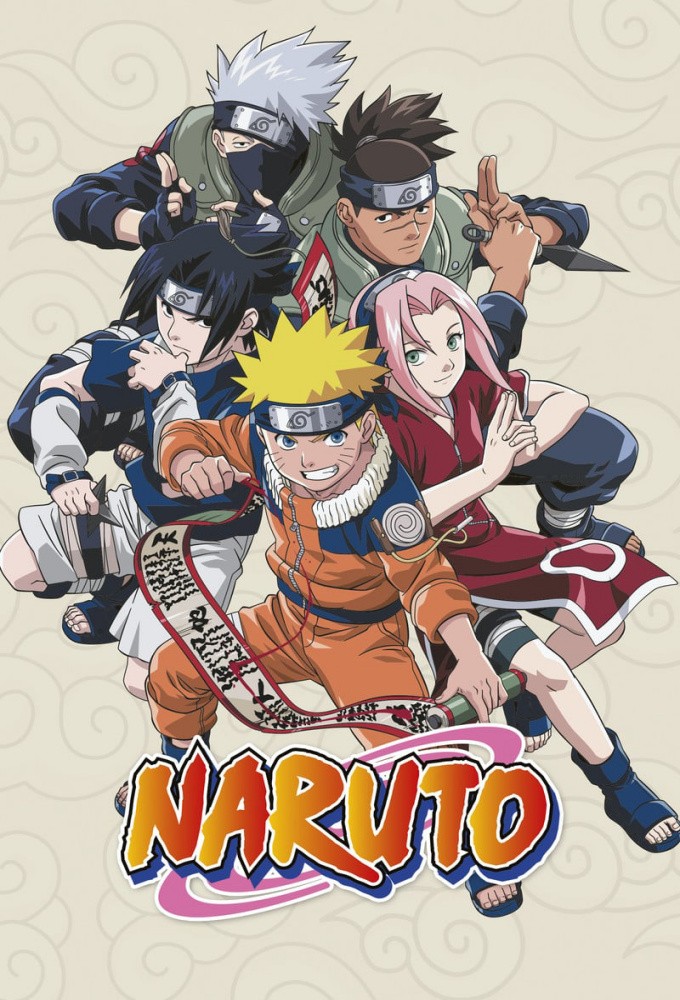
How many Naruto movies are there?
The Naruto theatrical catalog contains 11 films. Three were released during the original Naruto television era, seven arrived during Naruto Shippuden, and Boruto: Naruto the Movie followed in 2015. VIZ separates the original Naruto films from the Shippuden movie catalog, which is a useful way to understand the cast and story period each group uses.
The release list is Ninja Clash in the Land of Snow, Legend of the Stone of Gelel, Guardians of the Crescent Moon Kingdom, Naruto Shippuden the Movie, Bonds, The Will of Fire, The Lost Tower, Blood Prison, Road to Ninja, The Last, and Boruto: Naruto the Movie.
All 11 remain individual films in AnimeAnchor. They have their own titles, release years, artwork, summaries, and source links. The Naruto and Naruto Shippuden episode guides keep their television numbering, so a theatrical story never appears as a mystery episode or a fabricated season entry.
Choose the movie route that matches your watch
Release order is the reliable route for a full movie marathon. It lets the cast age, techniques advance, and franchise focus change in the same sequence audiences saw in theaters. That order also prevents Boruto from appearing before the viewer understands Naruto's adult role.
First-time television viewers can take a different approach. Finish the original Naruto series before watching its three movies, then save the first six Shippuden films until the related characters and abilities feel familiar. Place The Last after Naruto Shippuden episode 493 and before episode 494. Boruto comes after the Shippuden ending.
A shorter sampler works too. Ninja Clash shows the early Team 7 formula on a theatrical scale. Road to Ninja supplies the strongest alternate-world premise. The Last carries the most direct weight in the ending route. Those three films represent distinct stages without requiring an 11-movie commitment.
1. Ninja Clash in the Land of Snow (2004)
Team 7 escorts actress Yukie Fujikaze to the Land of Snow, where political history catches up with the film production. Yukie is more than a reluctant celebrity. Her connection to the country places Kakashi, Naruto, Sasuke, and Sakura inside a conflict involving armored enemies and a stolen throne.
This is the closest the movie run gets to extending the early Team 7 mission pattern. Kakashi leads, Naruto pushes against a client who has given up, and Sasuke and Sakura receive clear action assignments. The snow setting and chakra armor give the film a visual identity separate from the forest and village locations used heavily in the TV series.
Watch it after finishing the original Naruto series if you want to avoid placement debates. Viewers who already know the early Team 7 cast can also use it as their first movie. It asks for no Shippuden knowledge and does not reveal Naruto's later family history.
2. Legend of the Stone of Gelel (2005)
Naruto, Sakura, and Shikamaru encounter Temujin during a mission involving a lost ferret. The pursuit expands into a struggle over the Stone of Gelel, an energy source tied to an old civilization and a plan for a supposed utopia. Gaara and Kankuro enter the conflict from the Sand side.
The film moves away from the standard Team 7 arrangement because Sasuke is absent and Shikamaru takes the third slot. That change gives Naruto a different tactical partner and lets the Sand siblings operate as more than Chunin Exams opponents. Temujin's loyalty to his cause becomes the story's central question.
Choose this one for a wider original-era cast and a fantasy-adventure tone. Its Gelel mythology stays inside the movie, so the television story never requires the viewer to know what happened. Release order places it second, after Ninja Clash and before Crescent Moon Kingdom.
3. Guardians of the Crescent Moon Kingdom (2006)
Naruto, Sakura, Rock Lee, and Kakashi protect Prince Michiru and his son Hikaru on their return to the wealthy Land of the Moon. The assignment begins with the prince's extravagant habits, including his decision to buy an entire circus, then turns into a fight over a royal takeover.
Rock Lee replaces Sasuke in the active squad, giving the final original-series movie a team based on direct physical combat and Sakura's strength. Naruto's bond with Hikaru supplies the emotional thread. Both boys have to move past stubborn first impressions before the political threat can be faced together.
This is the last movie centered on Naruto's younger design and original-series team pool. It works well at the end of an original Naruto movie pass. The bright island setting and circus sequence also make it the lightest-looking entry before the Shippuden films adopt older designs and heavier threats.
4. Naruto Shippuden the Movie (2007)
The first Shippuden movie pairs Naruto with Shion, a priestess who can seal the spirit Moryo. Shion foresees Naruto's death, and the escort mission becomes a test of whether that prediction can be changed. Naruto reacts to the warning by staying beside her rather than accepting a future decided in advance.
The film introduces the older Naruto cast to theaters without depending on late-series revelations. Sakura, Neji, and Lee join the mission, while Kakashi and the Leaf forces respond to the larger attack. Shion's guarded personality gives Naruto someone whose fatalism clashes directly with his refusal to surrender.
Start the Shippuden movie run here. The television series should first establish Naruto's return to the village and the post-timeskip team relationships. Beyond that basic setup, the film stands on its own and does not need a precise gap between two TV episodes.
5. Bonds (2008)
The Land of Sky launches an aerial attack on the Hidden Leaf, using flying machines and a mobile fortress. Naruto travels with Sakura and Hinata while helping Amaru and the doctor Shinnō. The mission eventually brings Naruto and Sasuke into the same battlefield during Sasuke's time away from the village.
That temporary Naruto and Sasuke pairing is the main reason many viewers seek out Bonds. The movie allows them to fight a shared enemy without pretending their relationship has been repaired. Sasuke's presence also means the film should wait until Shippuden has shown his status after leaving Orochimaru.
Watch Bonds second within the Shippuden films and fifth across the entire Naruto movie run. It suits viewers who want large machines, aerial combat, and an unusual setting more than a story tied closely to a television arc.
6. The Will of Fire (2009)
Shinobi with inherited abilities disappear from several major villages, placing suspicion on the Land of Fire and raising the risk of war. Kakashi leaves the Hidden Leaf as part of Tsunade's response, and Naruto refuses to accept a plan that treats his teacher as a disposable answer to the crisis.
The Will of Fire draws strength from Kakashi's bond with Team 7 and the wider group of Leaf rookies. Naruto's insistence on retrieving him echoes the promise to bring Sasuke home, while Kakashi's actions reflect the same habit of carrying danger away from his students. The supporting cast receives more to do than in many Naruto films.
Pick this film for Kakashi and village teamwork. It lands better after the original series has established Kakashi's rule about protecting comrades. Release order keeps it between Bonds and The Lost Tower, though it can also accompany a Kakashi-centered rewatch.
7. The Lost Tower (2010)
Naruto pursues Mukade into the ruins of Loran and is pulled into the past by the Ryumyaku, a powerful underground chakra flow. He reaches Loran when Sara is its young queen and meets Minato Namikaze during a mission conducted years before Minato becomes the Fourth Hokage.
The father-and-son encounter gives The Lost Tower its appeal, but the characters cannot treat it as a normal family meeting. Naruto has limited knowledge of the period, Minato has a mission to finish, and Sara must discover how Mukade is using her city. Time travel creates the connection while keeping the television revelations intact.
Wait until Shippuden has made Minato's place in Naruto's life clear. The movie cannot replace the episodes about Naruto's birth or parents. It works as a companion after those facts carry emotional weight, then returns the viewer to the main timeline without changing the TV episode spine.
8. Blood Prison (2011)
Naruto is framed for attacks he did not commit and sent to Hozuki Castle, a prison controlled by Mui. A seal restricts Naruto's chakra, leaving him to investigate the accusation, survive other prisoners, and learn what the fortress is hiding. Ryuzetsu becomes his key connection inside.
The prison setting strips away Naruto's usual village support. Kakashi and Sakura are no longer beside him in each confrontation, and brute force cannot solve the opening problem while the seal remains active. The result feels closer to a contained escape mystery than an escort mission.
Blood Prison is the eighth Naruto movie and fifth Shippuden film. Watch it for a darker isolated setting and a guest cast outside the standard Leaf teams. Treat Naruto's conviction as this film's setup rather than a permanent change in his status across the television series.
9. Road to Ninja: Naruto the Movie (2012)
A masked enemy sends Naruto and Sakura into an altered version of their world. Familiar personalities are reversed, Sakura's family situation changes, and Naruto returns home to living versions of Minato and Kushina. The illusion offers him the childhood and parents he had always wanted.
Road to Ninja uses alternate behavior for jokes, yet Naruto's choice gives the movie its weight. He has to separate a comforting life from the relationships and losses that formed him. Sakura faces a related lesson when freedom from her parents no longer feels like the fantasy she imagined.
Save this film until Shippuden has explained Minato and Kushina. Without that history, the alternate home has little force. For viewers choosing only one standalone Shippuden movie, Road to Ninja offers the clearest character premise and the strongest use of Naruto's family longing.
10. The Last: Naruto the Movie (2014)
The Last takes place after the Fourth Great Ninja War. Toneri Otsutsuki's plan threatens Earth as the moon moves closer, and Hanabi Hyuga is abducted. Kakashi sends Naruto, Hinata, Sakura, Shikamaru, and Sai on the rescue mission.
The film also follows Naruto as he begins to understand Hinata's feelings and his own response to them. That relationship work connects the war's conclusion to the wedding episodes at the end of Shippuden. Kakashi's position as Sixth Hokage further anchors the story in the postwar period.
Watch The Last after Shippuden episode 493 and before episode 494. It is the only Naruto movie in this list with a firm place inside the final television route. Watching it early reveals the war's outcome, adult roles, and relationship developments.
11. Boruto: Naruto the Movie (2015)
Boruto: Naruto the Movie shifts the lead perspective to Naruto's son. Naruto is now Hokage, and his public responsibilities strain his relationship with Boruto. During the Chunin Exams, Boruto tries to prove himself while relying on a shortcut that his father has forbidden.
The arrival of Momoshiki and Kinshiki forces the family conflict into a larger battle. Sasuke acts as Boruto's teacher and Naruto's partner, so the movie also shows how the former Team 7 rivals operate as adults. The son who resents the Hokage has to see the person behind the office.
Watch it after finishing Naruto Shippuden and The Last. The Boruto television series later retells and expands this material, so viewers can choose the movie, the longer TV version, or both. The film remains a distinct 2015 theatrical release even where the story overlaps.
Which Naruto movies should a new viewer prioritize?
Choose Ninja Clash for early Team 7, The Will of Fire for Kakashi and the Leaf ensemble, Road to Ninja for Naruto's family conflict, and The Last for the Shippuden ending. Those four provide different reasons to watch rather than repeating the same escort formula.
Legend of the Stone of Gelel and Crescent Moon Kingdom suit viewers who want more original-series missions. Bonds is the Sasuke reunion pick. The Lost Tower is the Minato pick. Blood Prison offers the most isolated setting. The first Shippuden movie centers on Naruto challenging a fatal prediction.
Boruto belongs after the main story, even if you only plan to sample a few films. Its adult cast and father-son conflict assume knowledge that the other movies gradually build toward. Starting there turns the franchise's destination into an introduction.
Canon questions should not erase the films
Most Naruto films are self-contained and do not drive the television plot. That makes them optional for viewers following only the manga-based story spine. Optional does not mean that a film should be hidden, merged, or renamed as an episode.
A release guide should answer two separate questions. First, what is the object? Each title here is a theatrical film. Second, how does a viewer use it? The first nine can sit in a later movie pass, The Last belongs in the postwar ending route, and Boruto opens the next generation.
Keeping those questions separate protects official episode numbering and gives every film a useful page. It also allows a viewer to skip side stories today and return later without losing where the television series left off.
Final recommendation
For all 11 films, follow release order from Ninja Clash in the Land of Snow through Boruto: Naruto the Movie. Finish the original series before its three-film block, then watch the first six Shippuden films once their cast context is familiar.
Break release order only to place The Last correctly. Watch it after Shippuden episode 493, finish episodes 494-500, and move to Boruto afterward. This route respects each movie as a release while keeping the television ending in the sequence its relationship story expects.
Official Video and Images
JUMP MV: Naruto x Lovers by seven oops
Embedded from an official rights-holder, producer, or licensor channel.


Naruto Movie releases
Movies stay outside the TV episode count. That preserves official numbering and makes watch orders easier to trust when a franchise has theatrical stories, recuts, or side releases.
Key Naruto characters
Character pages connect spoiler-safe profiles, full story biographies, first appearances, and mapped episode or movie appearances back into the same catalog.
Useful AnimeAnchor Links
FAQ
How many Naruto movies are there in total?
There are 11 theatrical films across the original Naruto era, Naruto Shippuden, and Boruto: Naruto the Movie.
What is the first Naruto movie?
Ninja Clash in the Land of Snow, released in 2004, is the first Naruto theatrical film.
What order should I watch all Naruto movies?
Release order is the safest full route. Keep The Last after Shippuden episode 493 and before episode 494, then watch Boruto after the Shippuden ending.
Which Naruto movies can I skip?
The first nine are optional for the central television plot. The Last carries postwar relationship developments into Shippuden's wedding episodes.
Which Naruto movie has Minato and Kushina alive?
Road to Ninja places Naruto in an altered world where he lives with versions of Minato and Kushina. The Lost Tower also brings Naruto into contact with a younger Minato through time travel.
Is Boruto: Naruto the Movie part of Naruto Shippuden?
No. It follows Naruto as an adult but shifts the lead role and central family conflict toward Boruto.